Heart Valve Surgery in India
Heart valve surgery repairs or replaces a heart valve that is narrowed (stenotic) or leaking (regurgitant), most often the aortic or mitral valve. At DDMM Heart
Heart valve surgery repairs or replaces a heart valve that is narrowed (stenotic) or leaking (regurgitant), most often the aortic or mitral valve. At DDMM Heart Institute, both repair and replacement (mechanical or tissue valves) are performed, and VNR coordinates the care for international patients.
Overview
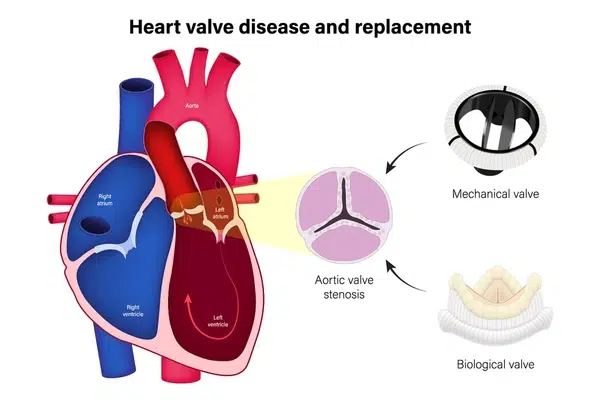
Heart valves keep blood flowing in the right direction. When a valve becomes narrowed or leaks, the heart works harder, causing breathlessness, fatigue and, over time, heart failure. Surgery repairs the valve where possible or replaces it with a mechanical or tissue valve.
The right choice of repair versus replacement, and valve type, depends on the valve affected, your age and your overall health — decided by the cardiac team after reviewing your echocardiogram.
Who needs this treatment
Valve surgery is considered for significant aortic or mitral valve disease causing symptoms or affecting heart function, including rheumatic valve disease, degenerative valve disease and some congenital valve problems.
Common symptoms & conditions
- Breathlessness, especially on exertion
- Fatigue and reduced exercise capacity
- Palpitations
- A heart murmur or known valve disease on echocardiogram
- Swelling of the legs
How the procedure works
The surgeon accesses the heart and either repairs the valve (for example, with a ring or by reshaping the leaflets) or replaces it with a mechanical or tissue valve.
Valve choice is individualised: mechanical valves are durable but need lifelong blood thinners; tissue valves may avoid long-term blood thinners but can wear over time.
Benefits
- Relief of breathlessness and fatigue
- Protection of long-term heart function
- Repair preserves the natural valve where possible
- Choice of valve type to suit the patient
Risks to discuss with your doctor
- Bleeding, infection or arrhythmia
- Need for blood thinners (mechanical valves)
- Anaesthetic risk
- Individual risk depends on health — discuss with the team
Recovery
Recovery is similar to other open-heart surgery: a few days in ICU and ward, gradual mobilisation, then supervised recovery. Cardiac rehabilitation supports a return to normal activity over several weeks.
Expected stay in India
International valve patients usually plan for around two weeks in India before fit-to-fly clearance.
Estimated cost in India
Heart valve surgery cost in India depends on the valve(s) involved, whether repair or replacement, the valve type and your reports — and is generally far below private care in many countries. VNR provides a personalised estimate from DDMM.
Final cost depends on your medical reports, confirmed diagnosis, hospital stay, implants used and doctor review. Request a free personalised estimate below.
Why DDMM & how VNR helps
Why DDMM Heart Institute
- NABH-accredited cardiac super-specialty hospital in Nadiad, Gujarat
- Cardiac team led by Dr. Sanjeeth Peter (MS, MCh, DNB, FIACS), 10,000+ surgeries
- Siemens cardiac cath lab and EPIQ 7 4D echocardiography
- 18-bed cardiac ICU with 24/7 intensivist cover
- No long elective waiting list
How VNR Medical Service helps
VNR coordinates the whole journey for international patients: free medical report review, written treatment plan and all-inclusive estimate from DDMM, visa and travel guidance, airport and hospital transfers, an on-ground liaison, caregiver accommodation, recovery support, fit-to-fly clearance and follow-up after you return home.
Related pages
Send your reports for a free clinical opinion
The DDMM cardiac team reviews your case and provides a written recommendation and all-inclusive estimate, usually within 48 hours.
- No cost, no obligation
- English-speaking coordinators
- Support from enquiry to follow-up
Common Questions
FAQs about Heart Valve Surgery in India
When a valve can be repaired, repair preserves the natural valve and may avoid lifelong blood thinners. Whether repair is possible depends on the valve and the disease — the DDMM team advises after reviewing your echo.
Mechanical valves are very durable but require lifelong blood thinners; tissue valves may avoid that but can wear over time. The choice depends on your age, health and preferences, discussed with the surgeon.
It depends on the valve, repair vs replacement and valve type. India is generally far more affordable than private care elsewhere. Request a free personalised estimate from DDMM through VNR.
Most international valve patients plan for about two weeks before fit-to-fly clearance.
Send us your cardiac reports. We reply within 48 hours.
Free clinical review by the DDMM cardiac team. No obligation. Our international patient coordinators reply 7 days a week.